
Details
Description
Mouthwatering fruits of melon and peach harmoniously blend with the delicate notes of pure China white tea.
Ingredients
White tea, green tea, natural fruit flavours
Health Benefits
Both black, green tea and white teas originate from the same plant, the Camellia sinensis. However, the final product differs in style, taste and caffeine content due to differences in processing. Green teas are not fermented or fully oxidized like black teas, but instead steamed or pan fired.
White teas consisting only of young buds, are withered and immediately dried in the sun or by steam. Like black and green teas, white tea contains an abundant source of natural plant-derived antioxidant compounds called polyphenols. Included within the broad antioxidant polyphenol class are flavonoids and catechins. A kind of flavonoid, catechins are found in tea leaves and may provide protective antioxidant action against harmful free radicals.
Research shows that these free radicals cause heart disease, some kinds of cancer and increase the risk of strokes. Drinking white tea with its high antioxidant levels help protect the body by combatting dangerous free radical activity. Further health benefits of white tea may include lowering cholesterol, strengthening the immune system, promoting healthy blood vessel functionality and even protecting teeth and bones.
In addition, white tea provides a source of nutrients including magnesium. managanese, potassium, calcium, and the vitamins C and K all in trace amounts. White teas contain the least amount of caffeine of all teas, generally ranging in the cup from 5-15 milligrams.
History
We find the first reference to White Tea during the Tang dynasty (618-907 A.D.). Later, in the Sung dynasty (960-1280 A.D.) ancient writings note that Emperor Hui Tsung favoured white teas over all others. The Chinese are thought to have used Silver Needle (Bai Hao Yin Zhen) as imperial trbutes during the Qing dynasty and perhaps even under the Tang and Sung dynasties.Sir Robert Fortune, the intrepid and legendary tea explorer, travelled to Drum Mountain in the 1840s and visited Buddhist monks growing Drum Mountain White Cloud Tea or traditionally known as Gushan Baiyun. He allegedly posed as a Chinese merchant journeying around the country in efforts to learn tea secrets that would enable the British to grow tea in India. Today, most white teas hail exclusively from China and, in particular, the Fujian province.The least processed of all teas, white tea boast the closest flavour to fresh, pure tea leaves. Tender young buds, covered in silvery down are carefully harvested by hand in the early spring and only for a couple of days each year.The leaves undergo two steps during processing. First, the leaves are withered and then immediately baked in the sun or sometimes in a pan or by steam. White teas undergo no fermentation and are classified based upon different standards of picking and selecting. White Peony (Bai Mu Dan) and Silver Needle are two particularly varities known for the highest quality.
Use
Try White Orchard for a delicate infusion with lingering peach and melon notes. Pairs well with fruit, a cream-based dessert or pastry.
Caffeine Level
Least caffeine
Character
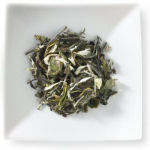
Leaves: White tea, green tea, natural flavours, flower petals
Aroma: Melon and peach notes
Colour: Pale gold
Taste: Sweet, fresh white tea with notes of melon, peach and a hint of tanin.
Origin
China
- Be the first to review this product
Write Your Own Review